

Smart Food Checkers are transforming how people understand the food they buy. With a quick barcode scan on MyFoodChecker, shoppers get ingredient lists, allergen alerts, and calorie data in seconds. But one big question remains: how accurate is it for nutrition data, and can you entirely rely on it?
What Is a Smart Food Checker?
The Smart Grocery Scanner is a digital tool designed to make shopping easier and safer. Instead of struggling with tiny, confusing nutrition labels, users scan a barcode to unlock:
- Ingredient lists in clear terms.
- Highlighted allergen warnings.
- Calories, fats, carbs, and proteins per serving.
- Hidden sugars, additives, or preservatives.
Globally, surveys show that 64% of consumers want clearer food labels, and nearly 1 in 3 people avoid reading them due to complexity. By providing transparency in seconds, My Food Checker acts as a reliable food checker that bridges the gap between packaging claims and reality.
Why Accuracy in Food Data Matters
Food choices directly impact health. For individuals with food allergies, incorrect information can lead to severe consequences. For those managing health conditions such as diabetes or heart disease, inaccurate calorie or sugar values can disrupt progress.
- The World Allergy Organisation estimates that over 250 million people globally live with food allergies.
- Studies show that misunderstanding nutrition labels contributes to rising obesity rates, with more than 650 million adults worldwide classified as obese.
- A Nielsen study revealed 59% of shoppers do not fully trust food packaging.
This is why shoppers increasingly seek tools like a trusted food scanner that deliver verified, transparent information.
How Accurate Is a Smart Grocery Scanner?
The accuracy of the Smart Grocery Scanner comes from its database, which updates products and matches them with their actual packaging. The tool reduces guesswork and ensures details are consistent.
- Allergens are highlighted in bold to prevent oversight.
- Calories and serving sizes reflect packaging data for better diet planning.
- Ingredient lists are simplified, making complex chemical names easier to understand.
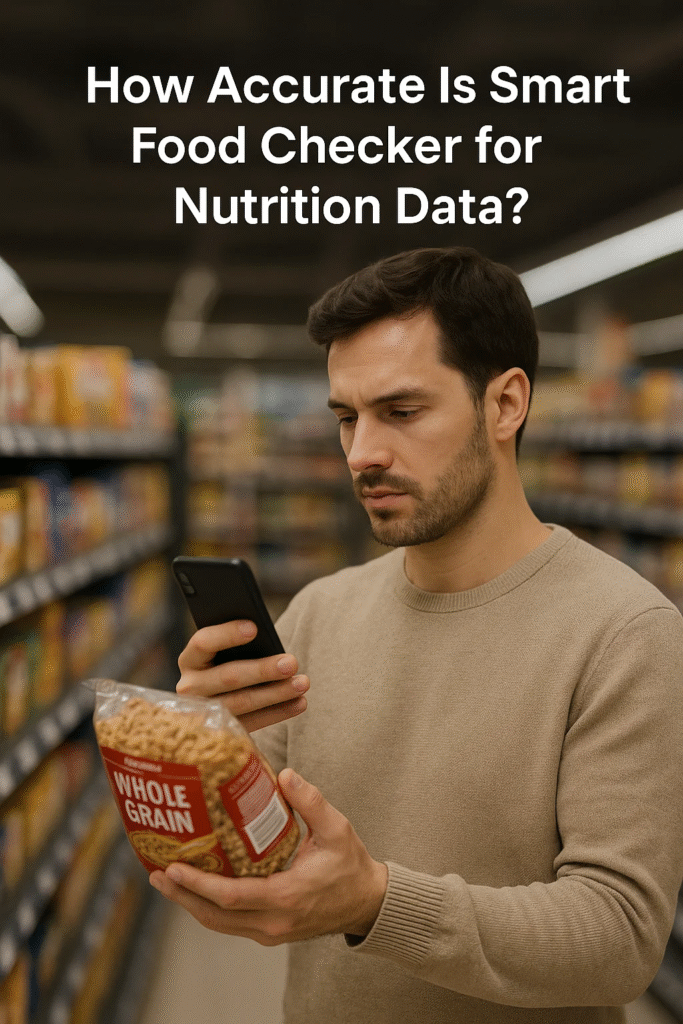
For example, a cereal box might highlight “whole grains” on the front but hide added sugars in fine print. A quick scan clearly displays the sugar content, allowing you to make an informed choice.
Accuracy here is about more than numbers; it’s about trust.
Why a Reliable Food Checker Is Essential
A reliable food checker My Food Checker isn’t just about saving time. It’s about:
- Safety: Protecting people from allergen risks.
- Transparency: Cutting through marketing tricks like “low fat” while hiding added sugars.
- Health management: Supporting diets such as keto, gluten-free, or diabetic-friendly eating.
- Convenience: Scanning takes seconds compared to reading every small label.
Shoppers no longer have to guess what’s really inside their food.
Nutrition Data vs. Marketing Claims
Food packaging often uses marketing buzzwords that can mislead shoppers. Words like “natural,” “light,” or “immune-boosting” may not reflect the actual ingredients.
For example:
- A drink labeled “natural” may still contain high fructose corn syrup.
- A snack labeled “low fat” could still be high in sugar.
By scanning with MyFoodChecker, you cut through these claims and view the raw data. This makes the tool a more reliable food checker than relying solely on what brands print on the front of packages.
Pro Tips to Maximise Smart Grocery Scanner
Here are ten practical ways to use Smart Grocery Scanner more effectively:
- Set up allergen alerts
Personalise your preferences so the app highlights items with nuts, gluten, or dairy instantly. - Scan before checkout
Do a final review of all items in your cart to avoid unsafe or unhealthy surprises later. - Use scan history
Revisit safe and trusted products without having to scan them again. Perfect for families who shop weekly. - Compare products quickly
Unsure which cereal or snack is healthier? Scan both and compare calories, sugar, and protein instantly. - Check hidden sugars
Many “healthy” products contain hidden sugars. Use the scan to reveal what front labels hide. - Scan even in low-signal areas
Designed to work in supermarkets where internet signals are weak, ensuring reliable scans anywhere. - Batch scan your groceries
Fill your cart and then scan all items in one session for faster results. - Plan meals ahead
Use scan data to design balanced meals that meet daily calorie and nutrient goals. - Involve your family
Teach kids or seniors at home to use the tool, helping the whole family make better choices. - Make scanning a habit
Over time, scanning will become second nature, making healthy and safe shopping automatic.
Real-Life Scenarios
Imagine a parent shopping with a child who has a peanut allergy. Instead of carefully reading every label, they can scan products and immediately know which items are safe.
Or consider a fitness enthusiast tracking protein intake. By scanning multiple protein bars, they instantly see which one has the best balance of protein and sugar.
For busy professionals, a quick scan before checkout ensures groceries align with health goals without wasting time.
FAQs
How accurate is Smart Food Checker compared to reading labels directly?
It is highly accurate because MyFoodChecker.com updates its database regularly. The scan mirrors label data and clearly highlights allergens or calories, saving you time while ensuring trust.
Can I use the tool without scanning barcodes?
Yes, you can manually search products too. However, scanning barcodes ensures you get the exact product match with fewer chances of error.
Does it work for diets like keto or gluten-free?
Absolutely. By scanning, you can instantly spot hidden carbs, gluten, or sugars that may not be obvious from packaging claims.
Will it function in stores with poor internet connectivity?
Yes, it is designed to work in weak-signal areas like supermarkets, making it reliable wherever you shop.
How does scan history make shopping easier?
The history feature lets you quickly access previously scanned products, making repeat shopping faster and safer without rescanning each time.
Conclusion
- Smart Food Checker from MyFoodChecker scans barcodes to reveal ingredients, allergens, and nutrition facts.
- Its accuracy comes from verified, updated databases that reflect packaging information.
- Acting as a reliable food checker, it helps shoppers cut through confusing labels and misleading marketing.
- Pro tips, such as batch scanning, utilising history, and allergen alerts, make shopping faster and healthier.
