

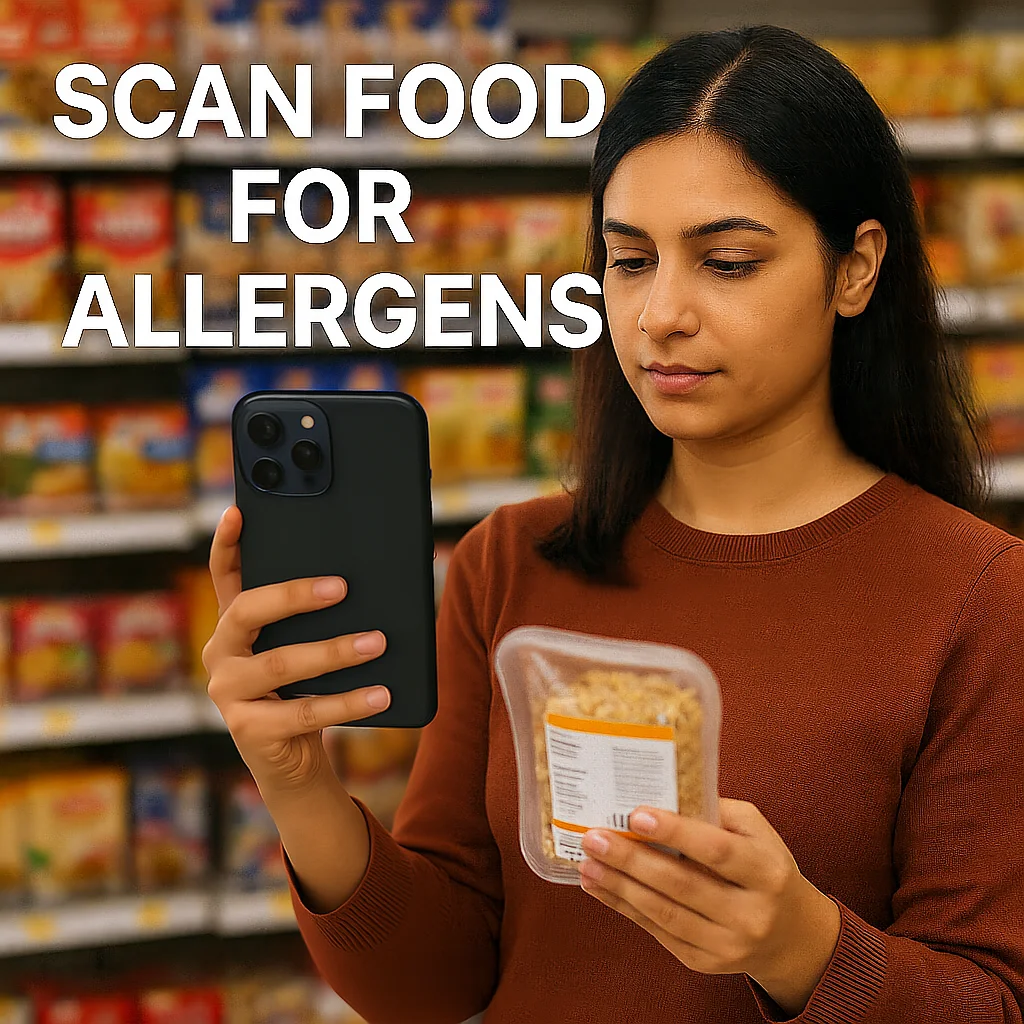
An allergen scanner app is a powerful tool for individuals who need to make safe food choices every day. Whether you’re allergic to peanuts, dairy, gluten, or something less obvious like soy lecithin, the risks of eating the wrong thing are real. Hidden allergens often slip past the average consumer due to confusing food labels or technical ingredient names. That’s where technology steps in. Using an allergen scanner tool MyFoodChecker, users can quickly and easily identify harmful ingredients before consumption. These apps are designed to scan food for allergens by decoding complex data from ingredient lists and barcodes, then comparing that information to your personal allergy profile.
But how exactly do these apps work? And how reliable are they when it comes to identifying both common and hidden allergens?
Table of Contents
The Challenge: Understanding Ingredients and Labels
If you’ve ever tried to read a food label, you know it can be a puzzle. Manufacturers often use scientific or alternative names for ingredients, which makes it harder for consumers to identify potential allergens. For example:
- “Casein” instead of milk
- “Albumin” instead of egg
- “Gluten” hidden in “malt extract” or “hydrolyzed wheat protein”
Even common allergens can be masked within flavor enhancers, stabilizers, or preservatives. That’s why relying solely on human judgment isn’t enough. An allergen scanner tool provides a second layer of safety that’s more systematic and accurate.
How an Allergen Scanner App Works
1. Barcode Scanning
The first step is scanning the barcode of a packaged product. App MyFoodChecker pull the full ingredient list from a central database.
2. Ingredient Recognition
The app then reads through the listed ingredients, identifying any entries that may match known allergens or trigger agents, both direct and indirect.
3. Allergy Profile Matching
Each user creates a personal profile listing their allergies. The app cross-references the scanned ingredients with your profile, looking for exact matches and known substitutes.
4. Hidden Allergen Detection
The real strength lies in detecting hidden allergens additives like E-numbers, flavor enhancers, or even plant proteins that contain traces of allergens. The app decodes them into plain terms.
5. Instant Feedback
The app displays a clear message: “Safe to eat” or “Allergen detected.” Some apps also recommend alternative products that match your dietary needs.
This instant analysis helps users scan food for allergens with confidence, even in unfamiliar environments like travel, dining out, or trying new brands.
Real Allergens These Apps Can Identify
The best allergen scanner tool isn’t limited to the eight major allergens. It also detects less common ones and often-overlooked triggers:
Common Allergens:
- Milk
- Eggs
- Peanuts
- Tree nuts
- Soy
- Wheat
- Fish
- Shellfish
Hidden Allergens:
- Gluten in soy sauce
- Sulfites in dried fruits
- Lecithin in chocolates and snacks
- Natural flavors containing dairy or nuts
- Food coloring (which can be derived from insects or synthetic chemicals)
Why You Should Use My Food Checker
MyFoodChecker is built specifically for people with dietary restrictions and allergy concerns. It’s more than just a barcode scanner. The platform combines food safety intelligence with personalized tracking to alert you in real-time.
- User-Friendly Interface: Anyone can use it, even seniors or kids.
- India-Focused Database: Ideal for Indian users with local and imported products.
- Daily Updates: New items and changes in ingredients are quickly added.
- Alternative Suggestions: If one product isn’t safe, it recommends others that are.
If you regularly need to scan food for allergens, this platform is a trusted companion that simplifies grocery shopping and eating out.
Pro Tips for Safer Allergen Scanning
- Customize your allergy profile completely. Include all known allergies, even mild ones.
- Double-check flagged items. Even if it looks safe, the app might have caught something you missed.
- Learn the alternative names of allergens. Helps when scanning isn’t available.
- Don’t rely only on “gluten-free” or “dairy-free” labels. Always scan to verify.
- Use the app offline by saving data. Helpful in areas with no internet.
- Teach your child or spouse how to use it. Safety is a shared responsibility.
- Use it while traveling. International ingredients can be trickier.
- Scan snacks at home first. Build a personal list of trusted foods.
- Use it when ordering online. Many stores show ingredient details.
- Report unlisted products. Help improve the database for all users.
Each tip will help you build strong daily habits and trust in the tools you use to scan food for allergens.
FAQs
1. How does an allergen scanner app detect hidden ingredients?
An allergen scanner app reads barcodes and ingredient lists, then analyzes them using a database of known allergens, alternate names, and additives. This allows it to flag hidden risks, like milk proteins in flavorings or gluten in malt extracts.
2. Can it be used for restaurant meals?
Most apps rely on packaging and barcodes, so they can’t scan cooked or unpackaged food. However, you can still use the app’s database to check ingredients you’re unsure about.
3. Is it useful for people with food intolerances?
Yes, but you must check if the app includes intolerance-related triggers like lactose or FODMAPs. Not all scanners offer this.
4. Can children use this app?
Yes, especially if designed with a simple interface. Parents should supervise and teach children how to interpret results correctly.
5. What if the app doesn’t recognize a product?
Use the manual search feature to type in the brand or product. You can also upload missing product info to improve the app’s detection system over time.
Conclusion
Navigating food allergies isn’t just about avoiding peanuts or gluten. Today, allergens are hidden in processed foods, additives, and even health products. That’s why using an allergen scanner app is no longer a luxury, it’s a necessity. App MyFoodChecker make it easier than ever to scan food for allergens, giving users real-time insights and safer choices. Whether you’re shopping in a supermarket, trying new snacks, or ordering groceries online, these tools give you the clarity and confidence you need.
